
610-459-9646
sales@sciotex.com
COUNTING GUIDE
Automated Counting: The Complete Guide to Industrial Counting Systems
How automatic counting machines count parts exactly instead of estimating by weight, how they compare with scales and hand counts, which system fits the way your parts are presented, and what payback to expect. Written by the engineers who design and build Sciotex counting systems.
Last updated October 2026 · Written by Sciotex Engineering · 14 min read
DEFINITION
What is automated counting?
Automated counting is the use of a machine, usually a camera-based vision system, to count individual parts or products without hand counting or weighing. An automatic counter images every piece as it falls through a drop zone, moves along a conveyor or lies on a work surface, and software counts each one, so the count is exact instead of estimated from weight.
Most plants still count in one of two ways: people count by hand, or a counting scale weighs a batch and divides by an average piece weight. Both work until the counts start to matter. Hand counting is slow and drifts with fatigue. A scale is only as accurate as the assumption that every part weighs the same, which is why many packers overfill on purpose to avoid short counts.
An automatic counter, also called an automated counting system or counting machine, removes both problems. It counts each piece individually, keeps the same accuracy on the first bag of a shift and the last, and records every count it makes.
Why an exact count matters
- Short counts cost credits, returns and customer trust, and a short kit can stop an assembly line.
- Over counts are product given away. Overfilling a scale-counted bag by a few percent adds up quickly on high-value parts.
- Accountability matters in aerospace, defense and nuclear work, where every fastener and component has to be accounted for.
- Traceability needs a record: a batch count you can show an auditor or a customer, not an estimate.
- Labor is freed from tedious counting for work that needs a person.
COUNTING METHODS
Counting methods compared: hand counts, scales, sensors and vision
There are four common ways to count parts in production and packaging. They differ in whether they produce a true count or an estimate, and in how they handle small, light, mixed or touching parts.
| Method | How it counts | Accuracy | Speed | Mixed or varying weights | Tiny or light parts | Record of the count |
|---|---|---|---|---|---|---|
| Hand counting | A person counts or tallies each piece | Drops with fatigue, speed and batch size | Slow: limited by the operator | Works, but slowly | Hard to see and handle | Only what the operator writes down |
| Counting scale (weigh counting) | Weighs the batch and divides by an average piece weight | Estimate: only as good as part-to-part weight consistency | Fast for large batches | Errors grow when weights vary or parts are mixed | Very light parts can fall below the scale's resolution | Weight, not a true count |
| Photo-eye or beam counter | Counts interruptions of a light beam as parts pass one at a time | Good when parts are singulated; touching or overlapping parts read as one | Limited by how well parts are separated | Counts anything that breaks the beam, so no part identity | Very small parts can miss the beam | A tally, usually without images |
| Vision counting machine | Cameras image every piece and software counts each one | Exact count of individual pieces; PerfectCount exceeds 99.99% at lower feed rates | Up to 2,000 parts per second in a drop zone | Weight does not matter; image analysis separates touching and overlapping parts | Counts parts down to 0.3 mm on standard models | Count per batch, with images available for review |
Swipe the table to see all columns →
Counting scales are the method most plants are replacing, because the scale’s weakness, varying piece weight, is exactly where the cost hides. Our article on counting scales vs. automated counting works through when a scale is still good enough and when it is not. For the camera side of the comparison, see how machine vision counts products faster.
HOW IT WORKS
How does an automated counting machine work?
Every vision counting system follows the same idea: present the parts so a camera can see each one, take images fast enough to catch every piece, and let software count what it sees. A drop zone counter such as PerfectCount does it while parts fall, which is why it is so fast.
- Feed: parts are loaded into a hopper.
- Singulate: a vibratory feeder spreads them into a stream.
- Image: two cameras view the drop zone from different angles as parts fall.
- Count: software counts each piece and tracks the batch total.
- Stop and pack: at the target count a gate closes so the bag, box or kit holds the exact quantity.
1. Image every piece
Industrial cameras capture the parts at high frame rates, so no piece passes unseen.
2. Separate touching parts
Image analysis software, rule-based, machine learning or AI depending on the application, tells apart parts that touch, overlap or tumble, the cases where beam counters double-count or miss.
3. View from two angles
Seeing each part from two views lets the software resolve pieces that hide behind one another.
4. Count, stop and record
The system stops at the batch quantity, logs the count and can signal a bagger, line or operator.
The imaging, lighting and image analysis behind this are the same building blocks used in inspection. Our complete guide to machine vision explains cameras, lighting and image analysis in depth.
CHOOSING A SYSTEM
Choose a counting system by how your parts are presented
The first question is not speed or price. It is how the parts arrive: poured loose, spread on a bench, moving on a conveyor, stacked in layers, or seeds. Each presentation has a counting machine designed around it.
PerfectCount: small parts counting machine
Parts pour from a hopper through a drop zone and are counted from two angles. Three standard sizes (Mini, Standard and XL) plus custom builds.
View system →
BenchCount: benchtop counting
The operator spreads parts on the counting surface, gets an instant snapshot count, then pushes them off. Much faster than counting piece by piece.
View system →
ConveyorCount: conveyor counting system
Counts single or mixed items as they move on a conveyor, in real time, directly on a production or packaging line.
View system →
LayerCount: automated pallet counting
Counts layers of cardboard boxes, sheets and other stacked product on pallets, so stack quantities are verified instead of estimated.
View system →
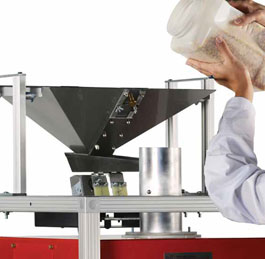
Seed Counter: seed counting machine
The Ball Coleman Seed Counter is a drop zone counter made for seed. It counts round 1.25 mm pellets at up to 2,000 per second and can count overlapping seed.
View system →
Quick decision guide
| If your parts are… | Start with | Best for |
|---|---|---|
| Loose small parts that can be poured into a hopper | PerfectCount drop zone counter | Bags, boxes or kits of an exact quantity, at up to 2,000 parts per second |
| Loose or mixed parts an operator can spread on a table | BenchCount benchtop counter | A fast snapshot count of a pile, then sweep the parts off and repeat |
| Parts moving on a conveyor, single types or mixed | ConveyorCount | Inline counting without stopping or re-handling production |
| Stacked sheets, boxes or layers of cardboard on pallets | LayerCount | Verifying stack and pallet quantities in packaging and warehouses |
| Seeds for agriculture, breeding or research | Ball Coleman Seed Counter | Fast, repeatable seed counts for packets and lab samples |
| Parts that need handling, sorting or inspection as well as counting | A custom or robotic system | Counting combined with inspection, sorting or pick-and-place |
Swipe the table to see all columns →
Robotic and combined systems are usually custom. Our robotic vision system for small high-tolerance parts is an example of a machine that inspects and counts in one cell. To compare all of our standard machines side by side, see industrial counting machines.
APPLICATIONS
What can be counted? Counting machines by part type
Vision counting does not care what a part weighs, only that the camera can see it. That makes it the right tool for parts that are light, small, mixed or valuable. These are the part families we count most often, and the system that usually fits each one.
Screws, bolts and fasteners
Screws, bolts, nuts, washers and rivets counted into bags, boxes or kits, where weight varies by plating and lot. Usually PerfectCount. Fastener counting →
Connectors and plugs
Electrical connectors, terminals and plugs, including irregular shapes that tangle or tumble. PerfectCount or BenchCount.
Electronic components
Electronic parts and components counted for kitting, inventory and line-side replenishment. PerfectCount, BenchCount or ConveyorCount. Component counting →
O-rings and seals
Light, flexible o-rings and seals that are too light to weigh-count reliably. PerfectCount for bulk, BenchCount for small lots.
Syringes and medical device parts
Syringe components and other device parts counted during manufacturing and packaging. ConveyorCount inline or PerfectCount in batches.
Filters
Filter elements and media counted by piece, including flat or stacked product. BenchCount, ConveyorCount or LayerCount.
Gems and stones
High-value stones where every piece matters and a count by weight is not good enough. PerfectCount or BenchCount.
Beads and pellets
Beads, pellets and spheres, including 1.25 mm pellets, counted at the highest drop zone speeds. PerfectCount.
Particles for the energy industry
Small, bead-like particles used in energy applications, counted with the accuracy and records those programs require. Custom drop zone systems.
Seeds
Seed for packets, breeding programs and research trials, counted fast and repeatably. The Seed Counter.
Not on the list? Standard counters handle parts from 0.3 mm to 150 mm, and custom systems go beyond that. The quickest way to know is to see a counting demo or send us sample parts.
INDUSTRIES
Automated counting by industry
Sciotex counting systems are deployed in aerospace, defense, nuclear, manufacturing and science. The reasons differ by industry, but they come back to the same thing: a count you can trust and prove.
Aerospace and defense
Fastener and component accountability, kit accuracy and foreign object debris (FOD) control, with a record of every count.
Electronics
Component and connector counts for kitting, inventory and replenishment, where parts are small and easy to miscount.
Medical device manufacturing
Counting device components and assemblies during production and packaging, with batch records to support quality systems.
Energy and nuclear
Exact counts of small particles and components for programs where every piece must be accounted for.
Hardware, fasteners and packaging
Bagging and boxing exact quantities instead of overfilling by weight, for distributors, packagers and manufacturers.
Agriculture and research
Seed counts for packets, breeding and trials, and particle or sample counts in the lab.
ACCURACY, SPEED AND DATA
How accurate is automated counting?
Accuracy and speed trade against each other: the faster parts fall, the more often two pieces cross the drop zone together. PerfectCount exceeds 99.99% accuracy at lower feed rates and stays above 99.5% at hundreds of parts per second for most parts. You choose the operating point that fits the job.
- Up to 2,000 parts per second is the top drop zone speed.
- 1,000 per second on round 1.25 mm pellets.
- 200 per second on larger parts such as ¼-20 nuts.
- Every batch recorded: counts are logged per batch and can be passed to a bagger, line controls or your own systems for traceability.
Worked example: the cost of counting by weight
A packer fills 500-piece bags of fasteners by scale and overfills by 2% to avoid short counts: 10 extra pieces per bag.
A counting machine run at 99.8% accuracy, with errors set to fall on the safe side, overpacks by about 0.2%: 1 extra piece per bag.
That saves 9 pieces per bag. At 2,000 bags a week it is 18,000 pieces a week, or $4,500 a week at $0.25 a piece, before counting the labor saved.
Illustrative figures. Use the calculator below with your own numbers.
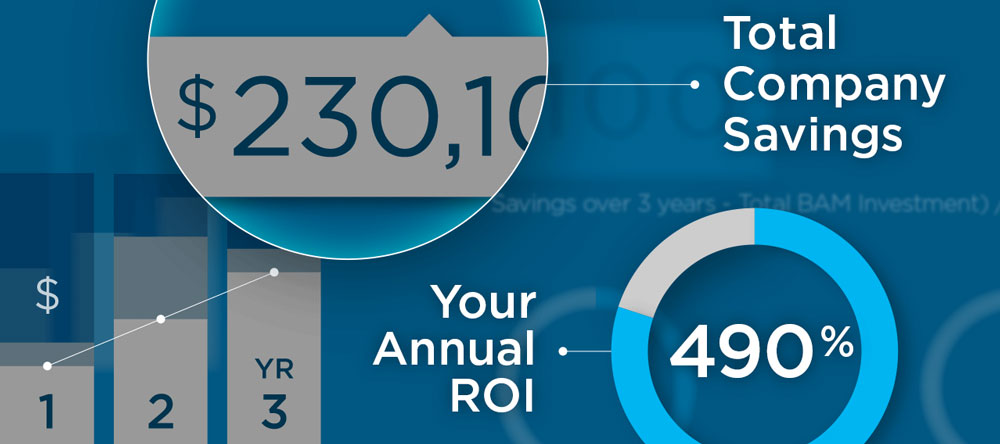
ROI Calculator
Estimate the return on an automated counting machine
Based on our most popular drop zone counters, this calculator estimates what a counting machine would save in your application. It assumes you pack by scale today and overfill to be safe, that you would use a standard-size counter, and that you target 99.8% accuracy with all errors as undercounts, so you would overpack by 0.2%.
Fill out the form to access the calculator
GETTING STARTED
From sample parts to a running counter
Most counting projects follow the same path. Standard machines move quickly; custom systems add design and build steps, but start the same way: with your parts.
How a counting project works
1. Send parts or watch a demo
We count your parts, or similar ones from our sample library, in an online demo.
2. Define the job
Batch sizes, target rate, accuracy and how counts feed packaging or your systems.
3. Choose standard or custom
A standard counter, a configured option, or a custom or robotic design.
4. Build and test
Designed, programmed and built in the US, then tested on your parts before it ships.
5. Install and support
Training, support and upgrades from the engineers who built it.
What to send for a recommendation
- Part names, photos or samples, with the size range
- Typical batch size and how many batches per shift
- How parts arrive: bulk, on a conveyor, on trays or stacked
- Count rate you need and the accuracy you require
- Where the count goes: bags, boxes, kits or inventory
- Any records or traceability your customers or auditors need
KEEP LEARNING
Counting articles
Counting Scales vs. Automated Counting
When weigh counting is good enough, where it fails, and what overfilling really costs.
Read article →
How to Count Products Faster with Machine Vision
How camera-based counting works on the production floor and where it beats manual counts.
Read article →
How to Automate Bulk and Batch Counting of Small Parts
Feeding, drop zone counting, batch gating, speed vs. accuracy and kitting.
Read article →
Manual Counting vs. Automated Counting
The true cost of counting by hand, a worked example and a step-by-step plan to switch.
Read article →
How to Count Products on a Conveyor Belt
Photo-eyes vs. vision counting, tracking, and when to count inline or in batches.
Read article →
AI Counting and Sorting
How AI counting and sorting work, and when AI, machine learning or rule-based analysis fits best.
Read article →
Fastener Counting Machines
Counting screws, bolts, nuts, washers and rivets exactly, and why weight counting falls short.
Read article →
Electronic Component Counting
Counting connectors, terminals and loose components, and when reels need a different tool.
Read article →
FAQ
Automated counting FAQs
What is automated counting?
Automated counting uses a machine, usually a camera-based vision system, to count individual parts or products without hand counting or weighing. Each piece is imaged and counted by software, so the result is an exact count rather than an estimate.
How accurate are automated counting machines?
Vision counting machines are very accurate. PerfectCount exceeds 99.99% accuracy at lower feed rates and stays above 99.5% at hundreds of parts per second for most parts. Accuracy and speed trade against each other, so the machine is set to the rate your job needs.
Is a counting machine better than a counting scale?
A counting scale estimates a count from weight, so its accuracy depends on every part weighing the same. A counting machine counts each piece, so plating, lot-to-lot weight changes and mixed parts do not affect it. Scales remain useful for coarse checks of uniform parts.
How fast can a counting machine count?
Drop zone counters reach up to 2,000 parts per second. Typical examples are about 1,000 per second for round 1.25 mm pellets and 200 per second for larger parts such as ¼-20 nuts.
Can a counting machine count touching or overlapping parts?
Yes. Image analysis separates parts that touch or partially overlap, and drop zone counters view each part from two angles to resolve pieces that hide behind one another.
What size parts can be counted?
Standard Sciotex counters handle parts from 0.3 mm to 150 mm. Larger items, stacked layers and pallets are counted with conveyor, benchtop, layer or custom systems.
How long does a counting machine take to pay for itself?
For most applications a counting machine pays for itself in weeks, through less product given away by overfilling, fewer short counts and less counting labor. The ROI calculator above estimates it for your parts.
Can Sciotex count my parts?
Most likely. Send part details or samples, or request a demo, and we will count your parts or similar ones from our sample library and recommend a standard or custom system.
Not sure which counting system fits your parts?
Tell us what you count and how it arrives. Our engineers will recommend a standard counter or a custom system, and can show it counting parts like yours.

© Copyright 2026 by Coleman Technologies, Inc. DBA Sciotex