
Industrial Automation Company
Industrial Automation Company for Custom Manufacturing Automation
Sciotex designs, programs and builds custom automation for manufacturers and labs, from inspection, counting and test systems to process control and robotic handling. When no off-the-shelf machine fits your parts, rate or line, we engineer one, then build and support it in the US.
Last updated: October 2026 · Sciotex Engineering Team
Multidisciplinary engineering
Controls, software, vision and mechanical design in one team.
Built and supported in the US
Designed, programmed and built in Pennsylvania.
The Short Answer
What Does an Industrial Automation Company Do?
An industrial automation company designs, builds and supports the equipment and software that run production with little manual effort: controls, robotics, machine vision, test and data systems. Sciotex is a custom automation company and systems integrator. We engineer the whole system, from mechanics and electrical panels to software, and stand behind it after installation.
That is different from buying a catalog machine. Machine builders sell standard equipment, and component makers sell PLCs, robots and sensors. When no standard machine fits your parts, rate or line, you need a manufacturing automation company that can engineer one. That is the work we do.
What You Get
What's in a Sciotex Automation Project
Automation is more than a robot and a PLC. A working system needs the right handling, sensing, controls and software, designed together and proven on your parts.
Engineering and design
Process analysis, requirements, mechanical and electrical design, and safety, reviewed in phases.
Controls, motion and robotics
PLCs, industrial PCs and real-time controllers, servo motion, gantries, cobots and robots.
Vision, test and data
Machine vision, automated test and data acquisition, with results logged to your database or MES.
Build, commissioning and support
Panel build, integration, FAT and SAT, operator training and long-term support.
Want the background first? Read the industrial automation guide.
Find Your Application
Automation Systems by Application
Automated inspection
Inline and benchtop systems that check every part for defects, dimensions and assembly.
Machine vision systems
Custom vision for inspection, measurement, guidance and identification.
Counting machines
High-speed counting of small parts, layers, sheets and mixed product.
Automated test systems
Test equipment that applies a stimulus, measures the response and decides pass or fail.
Data acquisition systems
High-speed measurement and monitoring for test, R&D and production.
Process control systems
Control and SCADA software for pilot plants and production processes.
View solution → Need AI-based image analysis or robotic handling? See AI systems development and robotic inspection systems.
Proof, Not Theory
Automation Systems Sciotex Has Built
Each system below was engineered around a specific part, process or lab problem, then built, tested and supported by the same team.
ConveyorVIEW Conveyor Inspection
Synchronized 2D and 3D stations inspect the top, underside and shape of large parts as they move on a conveyor.
View system →
Robotic Inspection Cell
A robot presents small, high-tolerance parts to cameras for surface defect classification and precise metrology.
View system →
PerfectCount Counting Machine
Parts pour from a hopper through a drop zone and are counted from two angles. Three standard sizes plus custom builds.
View system →
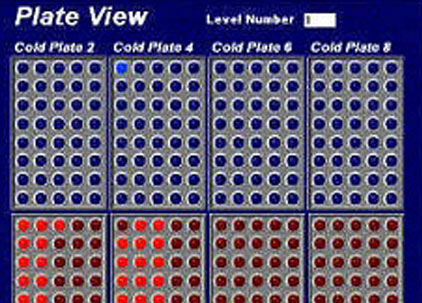
Robotic Vial Handling
A 3-axis robot moves vials between hot and cold plates across 1,280 positions, running up to 16 experiments at once.
View example →
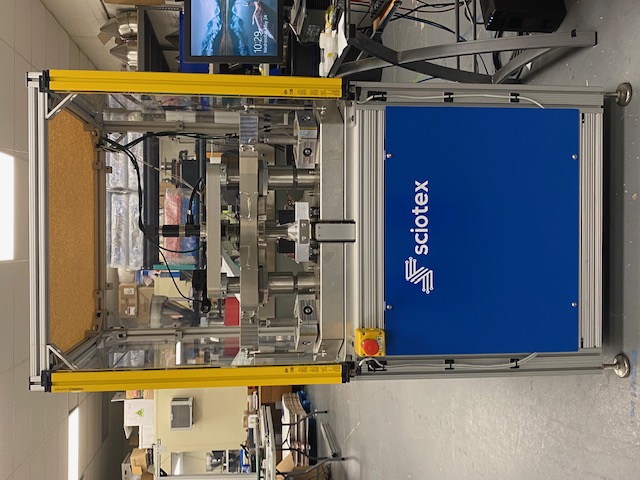
Ring Laser Gyro Test System
Over 60 high-speed digital and analog channels screen navigation-grade gyros.
View example →
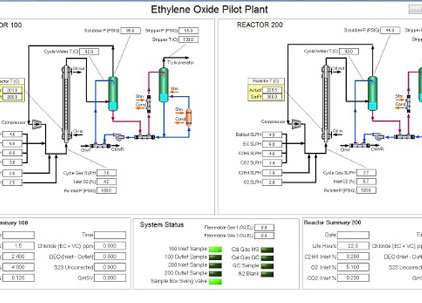
Ethylene Oxide Pilot Plant
SCADA for an ethylene oxide pilot plant on NI Compact FieldPoint real-time hardware.
View example →
Compare Your Options
Types of Automation Companies
“Automation company” covers very different businesses. Knowing which kind you need saves months of quoting.
| Type | What they do | Best for | Where Sciotex fits |
|---|---|---|---|
| Component manufacturers | Make PLCs, drives, robots, sensors and cameras | Buying parts for your own engineering team | We specify and integrate their products |
| Machine builders | Sell standard machines configured from options | Common, well-defined jobs | PerfectCount and our benchtop inspection platforms |
| Systems integrators | Engineer custom systems from proven components and own the result | Processes no catalog machine handles | Our core work: systems we've built |
| Engineering consultancies | Study, specify and manage; others build | Large programs with in-house build capacity | Discovery and requirements on every project |
Swipe the table to see all columns →
Standard machine or custom automation system
A standard machine is the right call when the job is common and well defined. Custom automation earns its cost when parts, rate, footprint or data needs fall outside what a catalog machine can do.
| Standard machine | Custom automation system | |
|---|---|---|
| Best for | Common, well-defined jobs | Odd parts, high speeds, mixed product, tight footprints |
| What you get | A proven machine you configure | A system engineered to your parts and tested on them |
| Fit to your line | You adapt the line to the machine | Built to fit your line, conveyor and space |
| Data | What the product logs | Results and records designed around how you use them |
| Support | Product support from the vendor | One engineering team responsible for the whole system |
Swipe the table to see all columns →
It isn’t either/or. Many projects pair a standard machine with custom fixtures, software or data connections. PerfectCount, for example, comes in three standard sizes plus custom options.
Choosing a partner? See 12 things to research when choosing an automation company.
The Business Case
What Custom Automation Pays Back
Labor redeployed
Operators move from repetitive counting, checking and loading to work that needs judgment.
Fewer escapes and less scrap
Every part checked the same way, every time, with defects stopped at the station.
More throughput
Stations that run at line rate and stop being the bottleneck.
Data you can use
Time-stamped results for traceability, SPC and process improvement.
Payback can be a few weeks on counting machines and 7–12 months on vision systems. We help you build the case from your own labor, scrap and throughput numbers before you commit.
Working With Sciotex
How an Automation Project Works
1. Discovery and requirements
Process analysis, constraints, rate, accuracy and success criteria.
2. Proof on real parts
Feasibility testing on your samples, free of charge for inspection projects.
3. Design
Mechanical, electrical, controls and software design, reviewed with you.
4. Build and integrate
Fabrication, panel build, programming and integration with your equipment.
5. Test, commission and support
FAT, SAT, operator training and ongoing support, with no subscription or support contract required.
What to send for a quote
Every automation project starts with the process. These help us scope yours quickly:
- A description or video of the current process
- Sample parts or product (free testing for inspection projects)
- Rate, accuracy and footprint requirements
- Data, reporting and network requirements
- Existing machines, PLCs or software to integrate
Why Sciotex
Why Work With Sciotex as Your Automation Integrator
A component vendor sells you hardware and a machine builder sells you a catalog machine. An integrator takes responsibility for the whole system working on your parts, in your plant.
Multidisciplinary team
Controls, software, vision and mechanical engineers working as one team.
Custom where it counts
Built for odd shapes, high speeds and special handling that standard machines don't cover.
Lower project risk
Phased projects, proof on real parts and active risk control at each stage.
Supported for the long term
Responsive support with no subscription or support contract required.
Trusted by the most innovative organizations









Before You Buy
Industrial Automation Company FAQ
What does an industrial automation company do?
It designs, builds and supports the equipment and software that automate production: controls, robotics, machine vision, test and data systems. A full-service company like Sciotex handles the work from requirements through design, build, commissioning and support.
What is the difference between an automation company and a systems integrator?
“Automation company” is a broad label that includes component makers and machine builders. A systems integrator engineers a custom system from proven components and takes responsibility for it working. Sciotex is an integrator that also builds its own standard machines, such as PerfectCount.
How much does industrial automation cost?
It depends on the process. Part variety, rate, accuracy, handling, safety and data requirements drive cost more than anything else. We scope each project after reviewing your process and, for inspection, testing sample parts, then provide a proposal.
Can you add automation to our existing equipment?
Yes. Many projects add inspection, counting, test or data collection to an existing machine or line and integrate with the PLCs and software already in place.
Can you test our parts before we commit?
Yes. For inspection projects, we test your sample parts free of charge to confirm the right system configuration before you buy.
What industries do you work with?
Medical device, pharmaceutical and life sciences; electronics and semiconductor; industrial products, plastics, metals and packaging; and research laboratories and scientific instrumentation.
What platforms and controllers do you work with?
We integrate with almost any major hardware or software platform, including PLCs, robots and vision hardware. Sciotex is also an NI and LabVIEW integrator.
Do we need a support contract?
No. Working with Sciotex does not require a subscription or support contract. Support is available when you need it, and support contracts are available if you prefer one.
Free Consultation
Discuss Your Automation Project
Tell us about the process, the parts and what you want to improve. An engineer will review it and suggest the best automation approach, with no obligation.
Learn the Technology
Related Guides and Articles
Industrial Automation Guide
What industrial automation is, its components and types, and how projects pay back.
Choosing an Automation Company
12 things to research before you hire an automation integrator.
Top US Manufacturers in Automation
How ten leading US manufacturers put automation to work.