
Custom Process Control Systems
Process Control Systems for Pilot Plants and Production
Sciotex designs, programs and builds custom process control systems for chemical, pilot plant and production processes: instrumentation and controllers, control software, operator screens, recipes and real-time data, engineered and supported in the US since 1997.
Last updated: October 2026 · Sciotex Engineering Team
NI and LabVIEW integrator
NI real-time hardware with LabVIEW, integrated with PLCs and controllers where they fit better.
Built and supported in the US
Designed, programmed and built in Pennsylvania.
The Short Answer
What Is a Process Control System?
A process control system measures process variables such as temperature, pressure, flow, level and composition, and automatically adjusts valves, heaters, pumps and feeds to hold them at their setpoints, while sequencing each step, alarming abnormal conditions and recording what happened.
Packaged controllers handle a few independent loops. When loops interact, recipes change from run to run, or the data matters as much as the control, as in most pilot plants, a custom system engineered around your process does the job properly. For the engineering background, see how process control loops work.
What You Get
What's in a Sciotex Process Control System
A panel of controllers is not a process control system. Each Sciotex system is engineered from your P&IDs to a working, supported plant system.
Process design and instrumentation
Control philosophy, loop and interlock design, I/O lists, sensor, transmitter and valve selection.
Controllers, panels and I/O
Real-time controllers, PLCs or single-loop controllers, I/O, wiring and panels sized to your loops and speeds.
Control software, HMI and recipes
PID loops, sequences, recipes, operator screens, alarms, trends and data logging.
Commissioning, tuning and support
I/O checkout, loop tuning, operator training, documentation and long-term support.
Want the engineering detail? See PID tuning for process loops and process control instrumentation.
Find Your Application
Process Control Systems by Application
Chemical reactors
Temperature, pressure, feed and agitation control for batch and continuous reactors.
Pilot plants
Flexible control, recipes and high-rate data for process development and scale-up.
Batch and recipe processes
ISA-88 phases and recipes, batch records and safe hold and restart.
Thermal processing and metals
Furnaces, induction and IR heating and controlled cooling to recipe profiles.
Powders and bulk solids
Feeder rate profiles, heater temperatures, weighing and material tracking.
Process monitoring and data
Live trends, alarms, historians and remote monitoring of plants and sites.
View solution → Every loop depends on the measurements behind it; see our data acquisition systems.
Proof, Not Theory
Process Control Systems Sciotex Has Built
Each system below was engineered around a specific process, from pilot plant reactors to production lines and remote facilities.
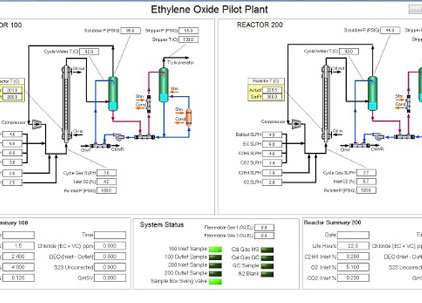
Ethylene Oxide Pilot Plant
SCADA for an ethylene oxide pilot plant on NI Compact FieldPoint real-time hardware.
View system →
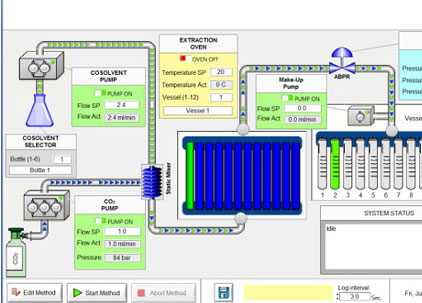
Reactor Control Systems
Numerous reactor systems on Watlow and Eurotherm controllers for temperature, pressure and flow.
View system →
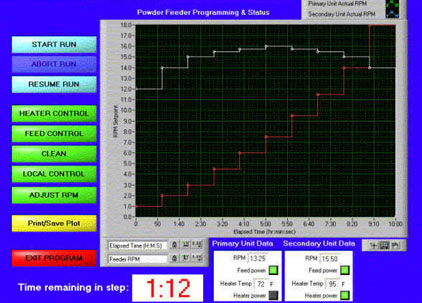
Powder Feed Control System
Two feeders with programmable rate and heater-temperature profiles, cleaning cycles and logging.
View system →
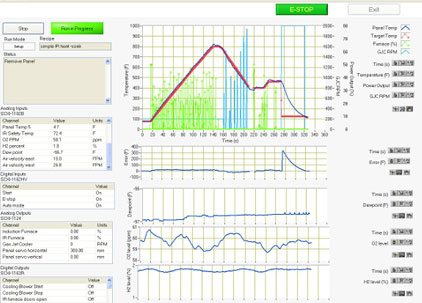
Hot Dip Simulator
PID heating and cooling, IR and induction furnaces and 2-axis motion, run from user-defined recipes.
View system →
Scale-to-PLC Signal Converter
Custom board polls six weigh scales over RS-232 and feeds a Profibus-DP PLC network with low latency.
View system →
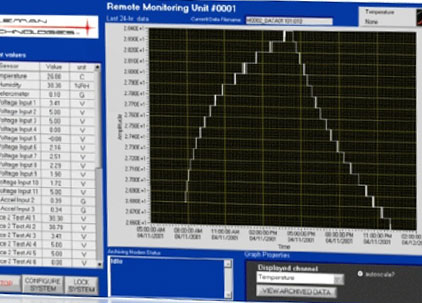
Remote Monitoring System
Logs environmental values at mission-critical remote sites and raises alarms when they leave tolerance.
View system →
Compare Your Options
Types of Process Control Systems
Process control systems differ in scale, flexibility and how much is engineered for your process. Most real systems combine more than one.
| Type | How it works | Best for | Sciotex system |
|---|---|---|---|
| Single-loop controller systems | Panel controllers each run a few PID loops, tied together by supervisory software | Reactors, furnaces and skids with mostly independent loops | Watlow and Eurotherm reactor systems |
| PC-based real-time control | Real-time controllers run loops and sequences; a host runs screens, recipes and data | Pilot plants and processes that change often or need high-rate data | Ethylene oxide pilot plant |
| Recipe and sequence control | Phases and recipes drive setpoints, motion and timing through each step | Batch, coating and thermal processes | Hot dip simulator |
| PLC integration | Custom controls and data exchange with existing PLC networks | Adding equipment or data to a PLC-based plant | Scale-to-PLC signal converter |
| Monitoring and alarming | Logging, trends and alarm notification without closed-loop control | Remote or unattended sites, plant visibility | Remote monitoring system |
Swipe the table to see all columns →
Packaged controllers or a custom process control system?
Packaged controllers and standard platforms are the right buy for simple, fixed jobs. A custom system makes sense when the process, the data or the pace of change is specific to you.
| Packaged controllers or standard platform | Custom process control system | |
|---|---|---|
| Best for | A few independent loops on a fixed process | Interacting loops, recipes, pilot plants, specialized equipment |
| What you get | Hardware you configure and integrate yourself | A working system engineered to your P&IDs, tested and documented |
| Data | Basic logging, if any | Logging, trends, run and batch records designed around how you use the data |
| Changes | Limited to what the product supports | Recipes and sequences designed to change safely |
| Support | Product support from the vendor | One engineering team responsible for the whole system |
Swipe the table to see all columns →
It isn’t either/or. As an NI and LabVIEW integrator we use real-time NI hardware where flexibility and data matter, and integrate with PLCs, single-loop controllers and existing plant systems where they fit better.
Choosing a platform? See DCS vs PLC vs SCADA and LabVIEW for process control.
The Business Case
What a Custom Process Control System Pays Back
Consistent product
Loops and recipes hold conditions the same way every run, reducing off-spec batches and rework.
Safer operation
Interlocks, alarms and defined safe states protect people, equipment and material.
Faster development
In pilot plants, editable recipes and complete data mean more useful runs and faster scale-up.
Data you can use
Every value, setpoint and operator action recorded, ready for analysis and batch release.
The return comes from fewer failed batches, less operator time spent watching and adjusting, safer operation and faster process development. We help you estimate it during the requirements review.
Working With Sciotex
How a Process Control Project Works
1. Requirements and control philosophy
We review your process, P&IDs, hazards, data needs and how operators and engineers will use the system.
2. Architecture and proof of concept
Platform, I/O and network design, and a proof of concept for any critical loop or interface.
3. Design
Instrumentation, panels, control logic, sequences, recipes and screens, reviewed with your team.
4. Build and program
Panel build, software development and simulation testing before anything reaches your plant.
5. Commission, tune and support
I/O checkout, loop tuning, training, documentation and ongoing support.
What to send for a quote
The right system depends on your process. These help us scope it quickly:
- P&IDs or a process description
- I/O list or the loops you need to control
- Recipes, sequences and operating modes
- Data, alarm and reporting requirements
- Existing controllers, PLCs or software to integrate
Why Sciotex
Why Work With a Process Control Systems Integrator
An instrument vendor sells you hardware. An integrator delivers a working system: instruments, controllers, software, screens and data engineered together, and one team responsible for the result.
NI and LabVIEW integrator
Real-time NI hardware and LabVIEW, integrated with PLCs and controllers where they fit better.
In-house software
Control logic, HMI, recipes and data systems written and supported by our own engineers.
Lower project risk
Simulation testing and proofs of concept before commissioning in your plant.
Supported for the long term
Documentation, upgrades and migration of older control systems as your process changes.
Trusted by the most innovative organizations




Before You Buy
Process Control Systems FAQ
How much does a custom process control system cost?
Cost depends mainly on the number of loops and I/O, sequence and recipe complexity, data and reporting needs, hazardous area requirements and how much integration with existing equipment is needed. We give a budgetary estimate after a short requirements review.
What do you need from us to quote?
P&IDs or a process description, the loops and interlocks you need, recipes and operating modes, data requirements and any existing controllers, PLCs or software we need to integrate with.
Can you work with our existing PLCs or controllers?
Yes. We regularly integrate with existing PLCs, single-loop controllers such as Watlow and Eurotherm, analyzers and plant systems, rather than replacing equipment that still works.
Can you upgrade or migrate an older control system?
Yes. We upgrade and migrate obsolete control systems, preserving proven control logic and data while moving to supported hardware and software, often in stages to limit downtime.
Do you build control systems for pilot plants?
Yes. Pilot plants are a core application: flexible recipes, high-rate data and independent safety interlocks, designed so the control strategy can carry into production.
What platforms do you use?
We are an NI and LabVIEW integrator and use NI real-time hardware where flexibility and data matter, alongside PLCs, single-loop controllers and supervisory software where they fit the process better.
How long does a project take?
Small systems can take a few weeks; pilot plant and production systems typically take a few months from requirements to commissioning, depending on scope and equipment lead times.
Do you provide support after commissioning?
Yes. We provide documentation, training, remote and on-site support, and changes and upgrades as your process evolves. No subscription or support contract is required, though support contracts are available if you prefer one.
Free Consultation
Discuss Your Process Control Project
Share your process, the loops and sequences you need, and how the data will be used. We’ll recommend an approach and tell you what it takes to build it.
Learn the Technology
Related Guides
Process Control Engineering Guide
How control loops, platforms and batch and continuous control fit together.
Pilot Plant Control Systems
Designing pilot plant control for flexibility, data and scale-up.
DCS vs PLC vs SCADA
Which control platform fits your process.